

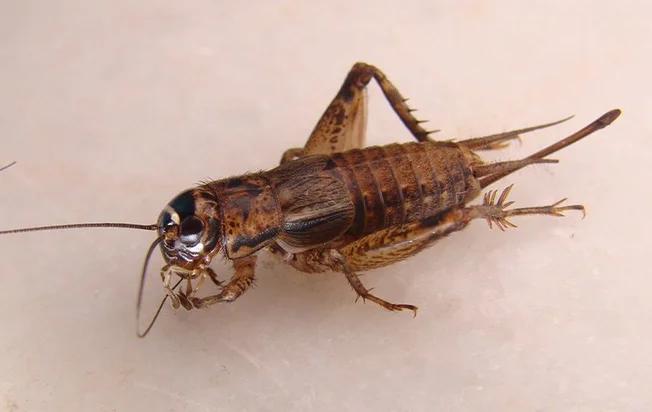
Chirping in the Walls or Crickets in the Basement? Here's What It Means
A cricket or two is just a nuisance. A chorus of chirping behind your walls at night, or a dozen crickets launching in every direction when you flip on the basement light, means a population has settled in — and that points to one of two things. Either crickets are pouring in from outside during the late-summer and fall migration, drawn to your home's lights and warmth, or moisture-loving camel crickets have established themselves in a damp basement or crawl space. The fix is different for each, which is why correctly reading the situation matters.
Like the other invaders people find indoors, crickets are usually telling you about conditions: outdoor lighting and unsealed gaps that let field crickets in, or the basement dampness that camel crickets can't resist. Spray the ones you see and more keep coming, because the attractants are still there. Frontier Trapper takes a source-first approach — addressing the lights, moisture, and entry points along with the crickets themselves. Below is how to identify the species you have, why Overland Park gets hit every fall, what removal costs locally, and how we silence the chirping for good.
What Kind of Cricket Do You Have?
Three crickets account for nearly every Overland Park home call, and telling them apart points you straight to the cause.
House Crickets
Light yellowish-brown, about ¾ to ⅞ inch, with three dark bands across the head and long wings. These are the classic chirpers — males rub their wings together to attract females, and that sound coming from inside a wall means they've gotten in. House crickets gravitate to warm, humid spots like areas near water heaters, furnaces, kitchens, and fireplaces, and they'll chew fabric and paper.
Field Crickets
Larger and dark brown to black, up to about an inch. They live outdoors but swarm toward buildings in late summer and fall, especially around exterior lights. They're strong jumpers, chirp loudly, and are the species behind the dramatic seasonal invasions when large numbers gather against and inside homes.
Camel Crickets (Cave or "Spider" Crickets)
Pale tan, humpbacked, wingless, with long spider-like legs — roughly the size of a large spider. They don't chirp, which makes them easy to miss until you disturb a cluster and watch them spring in all directions. Camel crickets are moisture specialists that colonize damp basements, crawl spaces, and garages, and once established, they can persist there year-round.
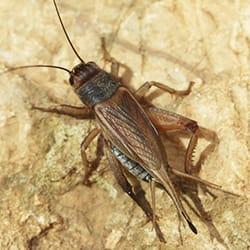
Identify the Cricket, Find the Cause
Why Overland Park Homes Get Crickets
Overland Park's location and housing make cricket pressure close to a yearly certainty, especially in the fall:
As with other occasional invaders, this isn't a reflection of how clean your home is. Crickets are responding to lights, moisture, and warmth, and a spotless home with bright exterior lighting or a damp basement is just as attractive as any other.
Signs of a Cricket Problem
A few crickets in the fall is normal here. Persistent chirping, repeated basement sightings, or chew damage signal an established population that won't clear on its own.
Are Crickets Dangerous?
Crickets don't bite, sting, or spread disease to people or pets, so they're not a health threat. Their real downsides are the relentless nighttime chirping that disrupts sleep and the damage they do to fabrics and paper — house and field crickets will chew clothing, curtains, upholstery, and wallpaper, sometimes ruining stored textiles. Large populations can also attract spiders and other predators that feed on them. Professional control matters not because crickets are harmful, but because a settled population is noisy, damaging, and self-sustaining until the lights, moisture, and entry points behind it are addressed.
How Crickets Get Into Your Home
Crickets enter at ground level, the same way other invaders do, usually guided by light and warmth:
Because field and house crickets are pulled in by light and camel crickets by moisture, the most effective control pairs sealing those entry points with reducing the attractants behind them.
How Much Does Cricket Removal Cost in Overland Park, KS?
Crickets are treated as an occasional invader, usually through a perimeter-and-interior pest program rather than as a standalone job. In the Overland Park and Johnson County market, expect these general ranges:
Estimates for a typical 1,600–2,000 sq ft home; larger homes generally add 10–15%. Pricing varies with infestation severity, whether the problem is an exterior migration or an established basement population, and any moisture conditions involved.
What moves the price:
Because cricket control depends so much on which species and scenario you're facing, an on-site inspection is the only way to price it accurately. Frontier Trapper inspects your home, identifies the species and the conditions driving them, and provides an estimate based on what your situation actually requires.
Our Cricket Control Process
Crickets respond best to a layered approach that addresses both the crickets outside and those already in.
1. Inspection & Identification
We identify which cricket you're dealing with and trace the cause — whether exterior lighting and migration pressure are feeding field crickets, warm, humid spots are drawing house crickets, or basement and crawl space moisture is sustaining camel crickets. We locate entry points, assess moisture, and evaluate lighting so the plan fits the actual problem.
2. Exterior Perimeter Treatment
We apply a residual barrier around the foundation, entry points, mulch beds, and harborage areas to intercept crickets before they get inside. Timing matters — treating ahead of the late-summer and fall migration knocks populations down before they reach your walls, and we use methods that stay safe for your family and pets when applied correctly.
3. Interior Treatment & Moisture Correction
For active indoor infestations, especially camel crickets in basements, we treat harborage zones and place targeted baits rather than relying on heavy interior spraying. Just as important, we identify the moisture and conditions sustaining them — humidity, drainage, water intrusion — and lay out the corrections that keep a basement from staying cricket-friendly.
4. Exclusion & Prevention
Finally, we seal the gaps crickets use — door sweeps, foundation cracks, expansion joints, and crawl space and basement openings — and recommend lighting and landscaping adjustments that make your home less of a beacon. The same sealing keeps out the other pests that share these entry points.
What You Can Do Yourself
A few homeowner habits make professional treatment far more effective and reduce cricket pressure:
A Year-Round Cricket Calendar for Overland Park
Why Choose Frontier Trapper for Cricket Control?
Frontier Trapper is a locally owned, woman-owned, licensed and insured company that knows Overland Park homes and the fall cricket migration that comes with Johnson County's suburban-agricultural setting. We identify the species and the cause before we treat, we pair perimeter and interior work with the moisture, lighting, and exclusion fixes that actually keep crickets out, and we use treatments that are safe for your family and pets when applied correctly. Because we target the conditions and not just the crickets you can hear, results last — and the same exclusion work that silences the chirping also protects against the other pests that share those entry points. When a straightforward exterior treatment is all you need, that's what we'll recommend.
Get Rid of Crickets in Overland Park Today
Stop losing sleep to chirping and clear the crickets out of your basement for good. Frontier Trapper will identify the species, treat inside and out, and seal and adjust your home so crickets stop finding their way in. Call (816) 914-8660 or request your inspection today.
Frequently Asked Questions
Find answers to common questions about our wildlife trapping and removal services
Request a Fast Estimate to Reclaim Your Home Today!
Stop losing sleep to chirping. Request your inspection today.
Call Now 816-914-8660