
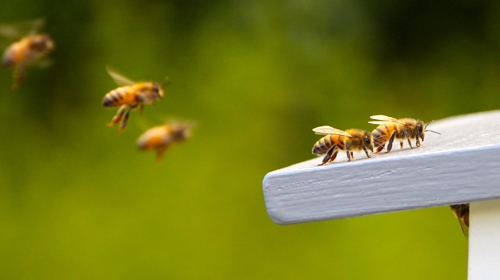
Bee Removal in Overland Park, KS

Bee Removal in Overland Park, KS

Bee removal begins with identifying the insect and determining whether it is nesting on the property or simply visiting flowers. Frontier Trapper helps Overland Park, Kansas, homeowners assess recurring bee activity, including carpenter bees around wood. Repeated traffic through a wall opening or fresh holes in a porch deserves a closer assessment; a single bee in the garden usually does not.

What bee activity should homeowners look for?
Bees repeatedly entering the same opening in siding, soffits or another sheltered area.
Round holes in wood with fresh sawdust below or bees repeatedly visiting the holes.
A cluster of bees on a branch or structure, which needs identification before a removal decision.
Carpenter bee holes in wood

Carpenter bee holes and wood damage

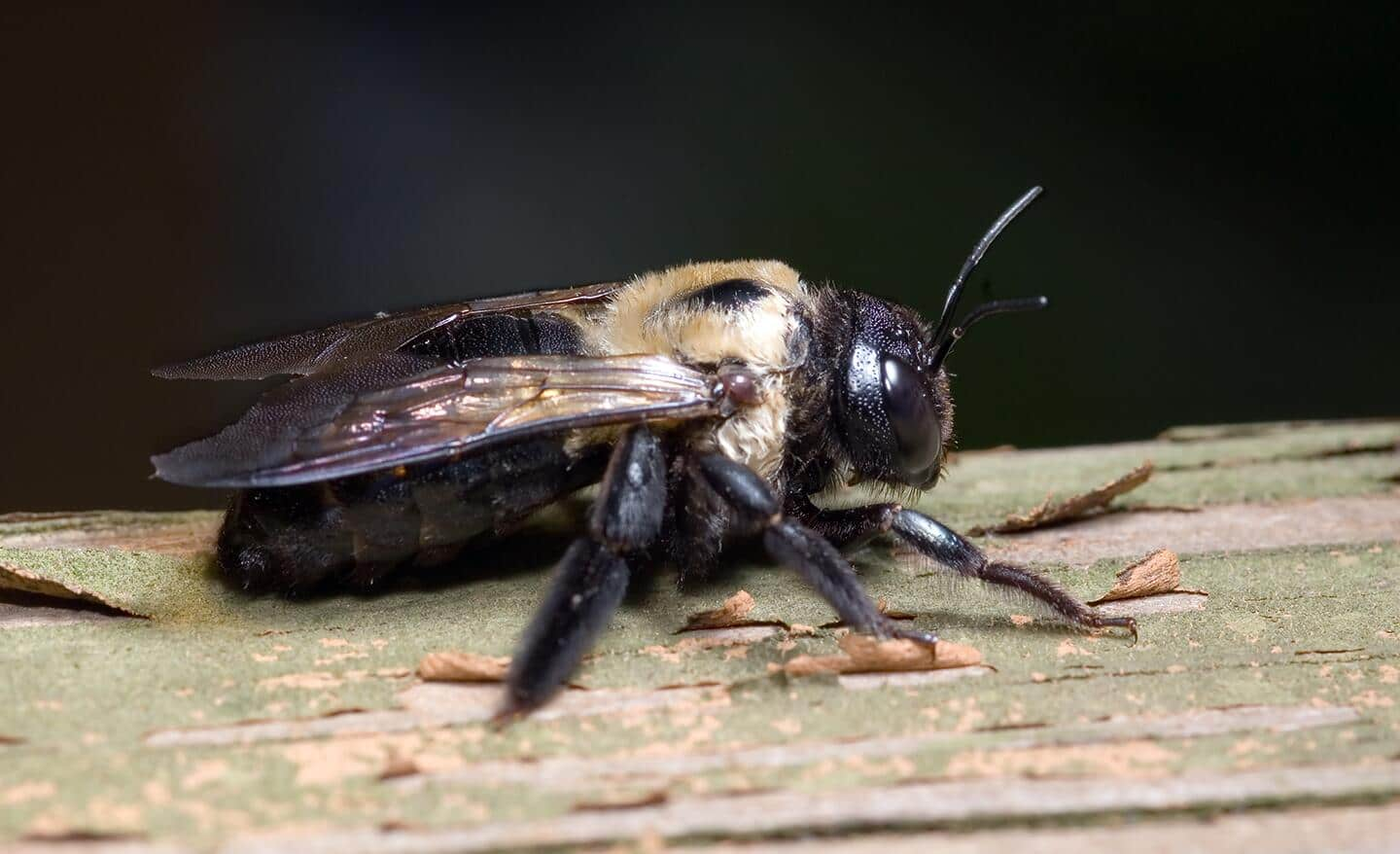
Carpenter bees excavate nesting tunnels in wood, often around exposed fascia, deck components and porch ceilings. Repeated use and expansion of tunnels can damage wood over time. A visible entrance does not reveal the full extent of damage or automatically mean a board needs replacement.

Why are bees returning to the same place?

Carpenter bee at wood

Wood and nesting access

Weathered or unfinished wood can provide carpenter bee nesting sites. Other bees may use existing cavities reached through exterior openings. Repeated trips to one location are more informative than the number of bees visiting nearby flowers.

Why identification matters before bee removal

Honeybees clustered at a hive

A swarm and an established colony are different

A cluster of honeybees may be a swarm rather than a colony already living inside the building. Keep your distance and describe its location when calling. Where honeybees are involved, ask whether a beekeeper or a specialist in live removal is appropriate; relocation availability depends on the situation.

Bees are pollinators, and their presence does not automatically call for extermination. Identification helps distinguish carpenter bee tunneling from honeybee nesting, bumble bee activity and wasps that may look similar.

Discussing bee service with Frontier Trapper

Tell Frontier Trapper where the bees enter, how long the activity has been present and whether wood or an interior wall is involved. Assessment should establish the insect, nesting area and access before treatment or removal is selected. For a concealed colony, ask what nest material needs attention and whether opening or repairing the structure is a separate task.

Bumble bee and carpenter bee comparison

Plan repairs after the activity is assessed

Do not plug a currently used entrance or open a wall to investigate. Ask about the sequence of treatment or removal, confirmation that activity has ended, and repairs. Frontier Trapper can discuss the next steps for the bee concern at your Johnson County property without assuming every situation needs the same approach.

How can homeowners reduce repeat nesting?

Maintain painted wood surfaces and repair weathered areas after existing activity is addressed.
Have old nesting holes and damaged wood assessed before filling or replacing materials.
Repair exterior gaps once a professional has confirmed they are no longer active entrances.
Monitor previously affected areas for fresh sawdust or renewed traffic rather than treating every bee near flowers.

When should you call about bees?

Professional assessment makes sense when bees repeatedly enter a building, nesting interferes with an entrance or deck, or wood damage keeps returning. Contact Frontier Trapper about your Overland Park home and describe the location within the Kansas City metro so access and service options can be discussed before work begins.

Frequently Asked Questions

Find answers to common questions about our wildlife trapping and removal services

Usually not. Bees foraging on flowers are different from bees nesting inside a wall or repeatedly tunneling into wood. The location and activity determine whether assessment is useful.
Carpenter bees often have a shiny, relatively hairless upper abdomen, while bumble bees look hairy. Repeated entry into round wood holes is another clue; seek identification if uncertain.
Not necessarily. Repeated tunneling can damage wood, but one entrance hole does not establish the extent. An assessment can help determine whether repairs need further evaluation.
Leave an active entrance open until it has been assessed. Sealing the hole does not remove the nest or address material that may remain inside a cavity.
Live removal may be an option, depending on the colony and access. Ask about an appropriate beekeeper or removal specialist; do not assume relocation is available for every nest.

Get Help Identifying Your Bee Problem

Call Frontier Trapper at 816-914-8660 about bee traffic, wood holes or a suspected colony in Overland Park. Describe the entry area to discuss the next step.

Call Now 816-914-8660