
Coyote Removal & Control in Overland Park, KS

Coyote Removal & Control in Overland Park, KS

Coyotes in the Yard and Pets at Risk? Here's What to Do

When you start seeing a coyote trotting through the yard at dusk, hearing packs howling at night, or losing cats and small dogs, it is more than an occasional sighting, it is a coyote that has learned your property is safe and worth returning to. Coyotes have adapted to suburban Overland Park as thoroughly as any animal, and once they lose their natural wariness of people, they den, hunt, and travel through neighborhoods as if they were open country.

A coyote is wildlife, not a pest problem you can spray or bait away, and because coyotes are strong, intelligent predators that can carry rabies and other diseases and are regulated under Kansas law, this is not a do-it-yourself situation. Lasting relief comes from a combination of humane, licensed trapping where warranted, hazing to restore the animal's fear of people, removing attractants, and exclusion. Frontier Trapper handles coyote conflicts the right way: we assess the risk, remove problem animals in compliance with Kansas wildlife regulations, and put prevention in place so your property stops being an easy stop. Below is how to recognize coyote activity, why Overland Park properties attract them, what removal costs locally, and how we resolve it.

What a Coyote Looks Like (and How to Tell It From a Fox or Dog)

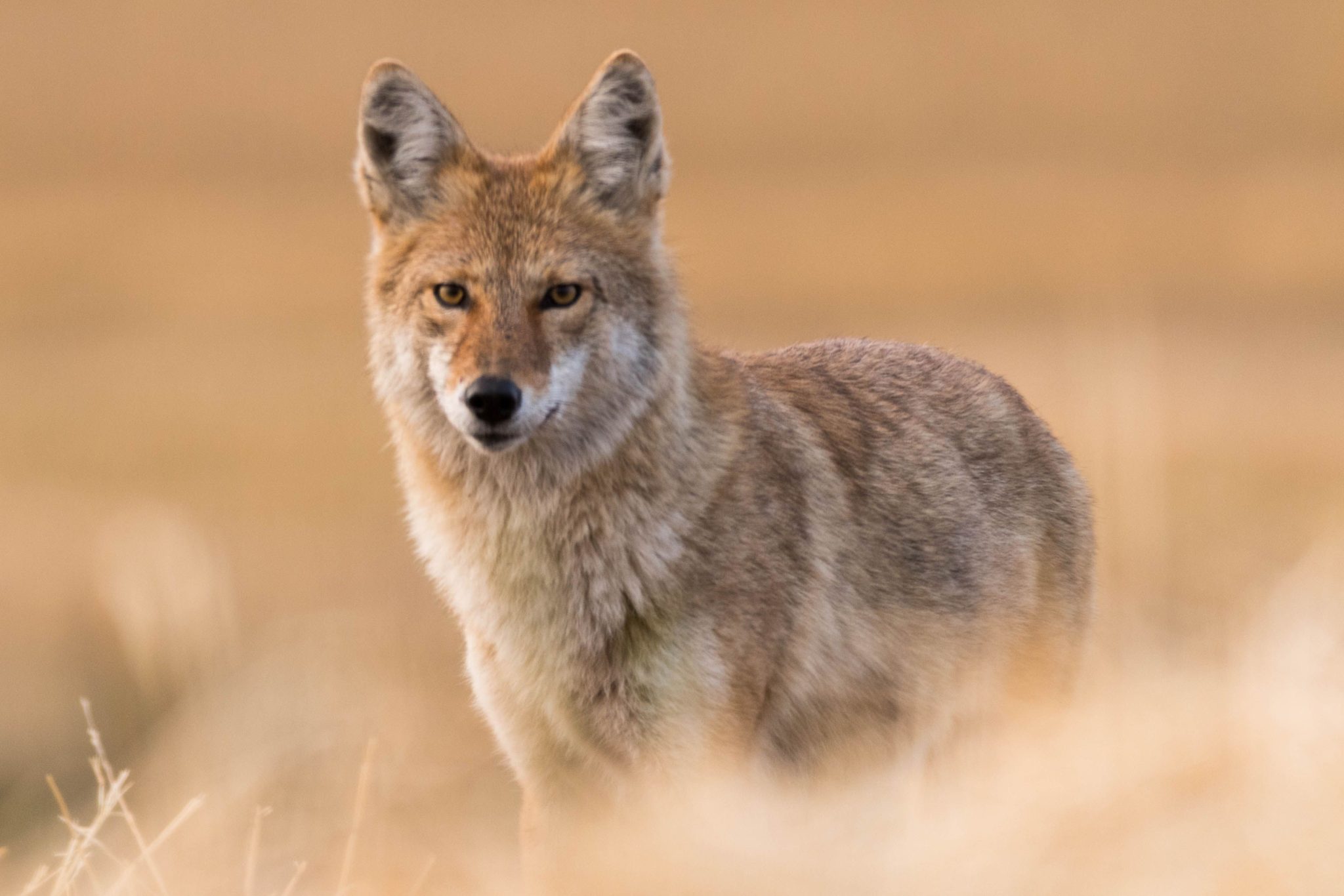
Coyotes are often mistaken for large foxes, German shepherds, or stray dogs, and getting the identification right matters because the risk and the response are different:

Medium size. Coyotes typically weigh 25 to 45 pounds and stand knee-high, larger than a fox but leaner than a similar-sized dog, with a lean, rangy build.
Grizzled gray-brown coat. A mix of gray, tan, and brown with rusty legs and ears and a lighter throat and belly; the coat looks coarse and thick.
A bushy, black-tipped tail carried low. Unlike a dog, a coyote almost always runs and trots with its tail held down, which is a reliable tell.
Pointed ears and a narrow muzzle. Erect, pointed ears and a slender, pointed face give the coyote a sharp, alert look.
A distinctive gait and howl. Coyotes move with a smooth, purposeful trot and produce yips, barks, and group howls, most often heard at night.
Coyote with a grizzled gray-brown coat and low, black-tipped tail in Overland Park, KS

Know What You Are Dealing With

A coyote's grizzled coat, pointed ears, and low, black-tipped tail set it apart from a fox or a stray dog. Recognizing bold, food-conditioned behavior early, before a coyote loses its fear of people entirely, is key to keeping pets and family safe.

Why Overland Park Properties Get Coyotes

Coyotes flourish along the edges where development meets open ground, and Overland Park and the wider Johnson County area are laced with exactly that habitat:

Abundant food. Pet food left outside, unsecured garbage, fallen fruit and birdseed, and the rabbits, rodents, and outdoor cats those attract all provide a reliable food supply.
Green corridors. Creeks, greenbelts, golf courses, parks, and drainage channels serve as travel routes and cover that let coyotes move unseen through neighborhoods.
Den sites. Brush, culverts, vacant lots, storm drains, and overgrown or wooded areas offer sheltered spots to den, especially in spring.
Habituation. When coyotes are fed, intentionally or not, and go unchallenged by people, they lose their wariness and grow bold, which is when conflicts escalate.

Signs of a Coyote Problem

Repeated sightings, especially a coyote that lingers, watches people or pets, or shows up on a predictable schedule rather than passing through.
Howling, yipping, and barking at night from nearby, sometimes in a chorus that signals a pack or a den in the area.
Missing cats and small dogs, or attacks on pets and backyard livestock and poultry.
Scat on trails, driveways, and lawn edges, often full of fur, bone, and seeds, used to mark territory.
Tracks resembling a dog's but in a straighter, more purposeful line, and worn trails through cover.
Bold, food-conditioned behavior, approaching people, following pets, or showing no fear, which is the most serious warning sign.

A coyote passing through is common in our area and not cause for alarm on its own, but a coyote that has lost its fear of people, is denning nearby, or is preying on pets is an escalating problem that should be addressed promptly.

Are Coyotes Dangerous?

Coyotes generally avoid people, and attacks on humans are rare, but they are not harmless, and a food-conditioned or habituated coyote is a genuine concern. The clearest danger is to pets: cats and small dogs are vulnerable to coyote predation, particularly at dawn, dusk, and overnight. Coyotes can also carry rabies, distemper, and mange, along with parasites that affect pets, and a coyote that is unafraid of people, active boldly in daylight, or behaving aggressively should be reported and taken seriously. The safest approach is to never feed or approach coyotes, keep pets protected, and let licensed professionals assess and handle a problem animal.

How Coyotes Affect Your Property

Coyote conflicts on a residential or acreage property in Overland Park usually show up as:

Predation on pets and livestock. Coyotes take cats, small dogs, backyard poultry, rabbits, and young or small livestock.
Denning and territory. A den on or near a property means repeated activity, protective behavior, and pups that will grow into more animals.
Digging and disturbance. Coyotes dig for rodents and food and may disturb gardens, trash, and compost.
Disease and parasite risk. Rabies, distemper, mange, and parasites left in scat and around den sites pose a risk to pets and, rarely, people.
Escalating boldness. Each easy meal reinforces habituation, so an unaddressed coyote typically grows bolder over time rather than moving on.

Because habituation only deepens the longer a coyote finds food and goes unchallenged, early, professional intervention is what keeps a manageable situation from becoming a serious safety problem.

How Much Does Coyote Removal Cost in Overland Park, KS?

Coyote work is specialty wildlife control, and cost depends on whether the job is assessment and hazing, trapping one or more animals, or ongoing management of a property with heavy pressure. In the Overland Park and Johnson County market, expect these general ranges:

Initial inspection / risk assessment: $100 – $250
Single-coyote trapping and removal: $300 – $600
Multi-animal / ongoing program: $600 – $2,000+
Hazing, attractant removal & exclusion planning: Quoted by scope
Fencing & livestock protection: Quoted by scope

These are general estimates for typical residential and small-acreage properties in our area. Coyote jobs vary widely with the number of animals, the terrain, how food-conditioned the coyotes are, and how much prevention and fencing the property needs.

What moves the price:

Number of animals and pressure. A single problem coyote is far simpler than a pack or a property under constant pressure that needs an ongoing program.
Terrain and access. Large acreage, heavy cover, and multiple travel corridors add time, traps, and visits.
Prevention scope. Attractant removal, hazing guidance, and protective fencing for pets and livestock are priced by what the property requires.
Livestock and poultry protection. Predator-proof fencing and enclosures for animals on the property are quoted based on scope.

Because no two coyote situations are alike, an on-site assessment is the only way to price the work accurately. Frontier Trapper evaluates the activity, the risk, and the property, and provides an estimate and a plan based on what your situation actually needs.

Our Coyote Control Process

Coyotes call for a measured, layered approach, because simply removing one animal without changing the conditions often just opens territory for another. We address the animal and the reasons it is there.

1. Thorough Inspection & Risk Assessment

We evaluate the sightings, tracks, scat, and any den, gauge how habituated the coyotes are, identify the food and cover drawing them in, and assess the risk to pets, livestock, and people. This determines whether the right response is trapping, hazing, exclusion, or a combination.

2. Safe & Humane Trapping and Removal

Where a problem animal warrants removal, we use trapping methods suited to coyotes and compliant with Kansas wildlife regulations, set and monitored to target the offending animal and avoid non-target wildlife and pets. All trapping and handling is carried out by licensed technicians rather than untrained hands.

3. Attractant Removal & Hazing

Removal is far more durable when the draw is gone. We identify and help eliminate the food and shelter attracting coyotes and provide hazing guidance to restore their natural fear of people, which is one of the most effective long-term tools for keeping coyotes out of a neighborhood.

4. Exclusion & Prevention

Finally, we recommend and install the exclusion that protects your property: predator-resistant fencing for pets and livestock, secure enclosures for poultry, and habitat and attractant changes that make the property a poor choice for the next coyote passing through.

What You Can Do Yourself

Homeowner action is especially powerful with coyotes, because their boldness depends on easy food and being left unchallenged. These steps support professional work:

Remove the food. Feed pets indoors, secure garbage, pick up fallen fruit and birdseed, and never intentionally feed coyotes.
Supervise and protect pets. Keep cats indoors, leash and accompany small dogs, especially at dawn, dusk, and night, and don't leave pets unattended in unfenced yards.
Secure livestock and poultry. Use predator-proof enclosures with buried wire and lock animals in at night.
Haze bold coyotes. If a coyote lingers, make yourself large, loud, and threatening, shouting, waving, using noisemakers, to reinforce fear of people; never run.
Reduce cover. Clear brush and overgrowth and close off den sites under decks, sheds, and in culverts on your property.
Report and act early. Report bold or aggressive coyotes and address the problem before habituation deepens.

A Year-Round Coyote Calendar for Overland Park

Winter: Breeding season runs January into March, so activity and howling increase and coyotes range more widely searching for mates and food.
Spring: Pups are born and raised in dens; adults hunt intensively to feed them and become more territorial and protective near the den.
Summer: Pups grow and the family stays active around the den; conflicts with pets can rise as coyotes work harder to feed growing young.
Fall: Young coyotes disperse to find their own territories, so new animals move through neighborhoods and sightings often increase.

Why Choose Frontier Trapper for Coyote Control?

Frontier Trapper is a locally owned, woman-owned, licensed and insured company that understands Overland Park neighborhoods and the coyotes that move through Johnson County's creeks, greenbelts, and open spaces. Coyote work demands judgment, not just a trap, and we take a measured approach: assessing the real risk, removing problem animals humanely and in full compliance with Kansas wildlife regulations, and pairing that with the attractant removal, hazing, and exclusion that actually change coyote behavior. Because we address why the coyote is there, not just the animal in front of us, results last and your property stops being an easy stop.

Get Coyote Help in Overland Park Today

Protect your pets, your livestock, and your family before a bold coyote becomes a serious problem. Frontier Trapper will assess the risk, remove problem animals humanely and legally, and put prevention in place so your property stays protected. Call (816) 914-8660 or request your inspection today.

Frequently Asked Questions

Find answers to common questions about our wildlife trapping and removal services

Attacks on people are rare, and coyotes usually avoid humans. The exception is a food-conditioned, habituated coyote that has lost its fear of people, which is a genuine concern and should be reported. The far more common danger is predation on pets, especially cats and small dogs at dawn, dusk, and overnight.
Cats and small dogs are vulnerable to coyote predation, particularly when unsupervised outdoors at dawn, dusk, or night. Keep cats indoors, leash and accompany small dogs, and avoid leaving pets unattended in unfenced yards where coyotes are active.
Do not run. Make yourself look large, be loud, wave your arms, shout, and use noisemakers to haze it and reinforce its fear of people. Pick up small pets and children. Report bold or aggressive coyotes, and address the food sources and conditions that made the animal comfortable.
Coyote control in Kansas is subject to state wildlife regulations. Frontier Trapper carries out any removal humanely and in full compliance with those rules, which is one reason this work should be handled by licensed professionals rather than attempted with over-the-counter traps or deterrents.
Not always. If the food and cover that attracted the coyote remain, another can move into the same territory. That's why we pair removal of problem animals with attractant removal, hazing, and exclusion, so the property itself stops drawing coyotes in.
Eliminate easy food, feed pets indoors, secure garbage, protect and supervise pets, use predator-proof enclosures for poultry and livestock, clear cover and den sites, and haze any coyote that lingers. Combining those steps with professional assessment and removal is what keeps coyotes from settling in.

Request a Fast Estimate to Reclaim Your Property Today!

Protect your pets, livestock, and family from coyotes. Request your coyote assessment today.

Call Now 816-914-8660