

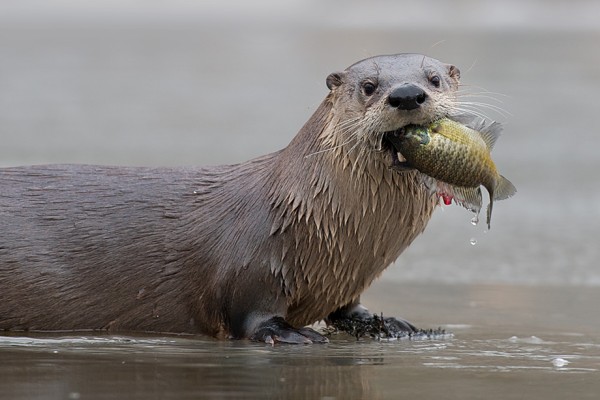
Fish Vanishing From Your Pond? You May Have a River Otter
When a stocked pond that was full of fish suddenly goes quiet, you find fish carcasses and scattered scales along the bank, and there are slides worn into the mud at the water's edge, a river otter may have found your water. Otters are powerful, efficient fish predators, and a single otter, or a family group passing through, can dramatically thin or clear out a private pond in a remarkably short time. They are strong swimmers that travel long distances along Johnson County's connected creeks and ponds, which is how they turn up on properties far from a river.
An otter is wildlife, not a pest you can treat with chemicals, and the river otter is a regulated furbearer in Kansas with a defined trapping season, so removal must be handled legally and by licensed hands. Lasting relief comes from humane, licensed trapping paired with protecting the pond and managing access. Frontier Trapper handles otter conflicts the right way: we remove the animals in compliance with Kansas wildlife regulations and put protection in place so your pond stops being an easy meal. Below is how to recognize otter activity, why Overland Park ponds attract them, what removal costs locally, and how we resolve it.
What a River Otter Looks Like (and How to Tell It From a Beaver or Muskrat)
River otters are often confused with beavers and muskrats because all three are semi-aquatic, but they look and behave very differently, and only the otter is after your fish:
Know What You Are Dealing With
Why Overland Park Ponds Get Otters
River otters have rebounded across Kansas and follow the water, and the Overland Park and Johnson County landscape gives them a connected network to travel and hunt:
Signs of an Otter Problem
An otter passing through may take some fish and move on, but latrine sites, repeated fish losses, and worn slides mean an otter is treating your pond as a regular hunting ground, which can devastate a stocked pond quickly.
Are Otters Dangerous?
River otters are not aggressive toward people and will almost always flee into the water rather than confront anyone, so they pose little direct threat. That said, they are strong wild animals with sharp teeth and will bite defensively if cornered, trapped, or handled, so they should never be approached, and a cornered otter can be surprisingly formidable. Otters can also carry parasites and diseases and their latrine sites are a sanitation concern near the water. The real harm, though, is economic: an otter can clear a stocked pond of fish and undo years of stocking and management. The safest and most effective course is to keep your distance and let licensed professionals handle removal legally.
How Otters Damage Your Property
Otter conflicts almost always center on the pond and its fish:
Because a single otter can do outsized damage to a fishery in a short time, early intervention is what saves your fish and your investment.
How Much Does Otter Removal Cost in Overland Park, KS?
Otter removal is specialty aquatic trapping that must be done within Kansas's regulated furbearer season, and cost depends on the number of animals, pond size and access, and any protection work. In the Overland Park and Johnson County market, expect these general ranges:
These are general estimates for typical residential and small-acreage ponds in our area. Otter jobs vary with the number of animals, pond size and access, how established the hunting pattern is, and the season under Kansas regulations.
What moves the price:
Because every pond and otter situation is different, an on-site assessment is the only way to price the work accurately. Frontier Trapper inspects the pond, the banks, and the sign, confirms how many animals are involved, and provides an estimate based on what your pond actually needs.
Our Otter Removal Process
Otters require an approach built around water and timing, removing the animals legally and humanely, then protecting the pond so it stops being a target.
1. Thorough Inspection
We inspect the pond, banks, slides, and latrine sites to confirm otter activity, estimate how many animals are using the water, and evaluate the access points and the extent of the fish loss. This determines the trapping strategy within the regulated season and what protection the pond needs.
2. Safe & Humane Trapping and Removal
Using aquatic trapping methods suited to otters and carried out within Kansas's furbearer regulations and season, we remove the animals as humanely and efficiently as possible. All trapping and handling is done by licensed technicians, set and monitored to target otters and minimize impact on non-target wildlife.
3. Pond Protection & Access Management
Removal alone leaves a pond that is still an easy target for the next otter traveling the waterway. Where feasible, we recommend and implement protection, fencing or barriers at key access points, structure that gives fish refuge, and access management, to make the pond far less rewarding to hunt.
4. Cleanup & Prevention
Finally, we address latrine sites and bank contamination and advise on longer-term prevention, monitoring the pond, managing bank cover and burrows otters use, and acting quickly at the first sign of return, so your fishery stays protected season after season.
What You Can Do Yourself
A few owner steps support professional removal and protect your pond, though the trapping itself must be left to licensed pros working within the regulated season:
A Year-Round Otter Calendar for Overland Park
Why Choose Frontier Trapper for Otter Removal?
Frontier Trapper is a locally owned, woman-owned, licensed and insured company that knows Overland Park water and the ponds, creeks, and drainages of Johnson County. Otter work is specialized aquatic trapping bound by Kansas's furbearer season and regulations, and we handle it legally, humanely, and by licensed hands. Because we pair removal with pond protection and access management rather than just pulling one animal, results last, and we help you safeguard the fishery you have invested in so the next traveling otter finds an easier meal elsewhere.
Protect Your Pond in Overland Park Today
Stop the fish losses before an otter clears out your pond and undoes years of stocking. Frontier Trapper will inspect your water, remove the otters humanely and legally within the regulated season, and put protection in place so it stays resolved. Call (816) 914-8660 or request your inspection today.
Frequently Asked Questions
Find answers to common questions about our wildlife trapping and removal services
Request a Fast Estimate to Protect Your Pond Today!
Stop the fish losses before an otter clears your pond. Request your otter inspection today.
Call Now 816-914-8660