

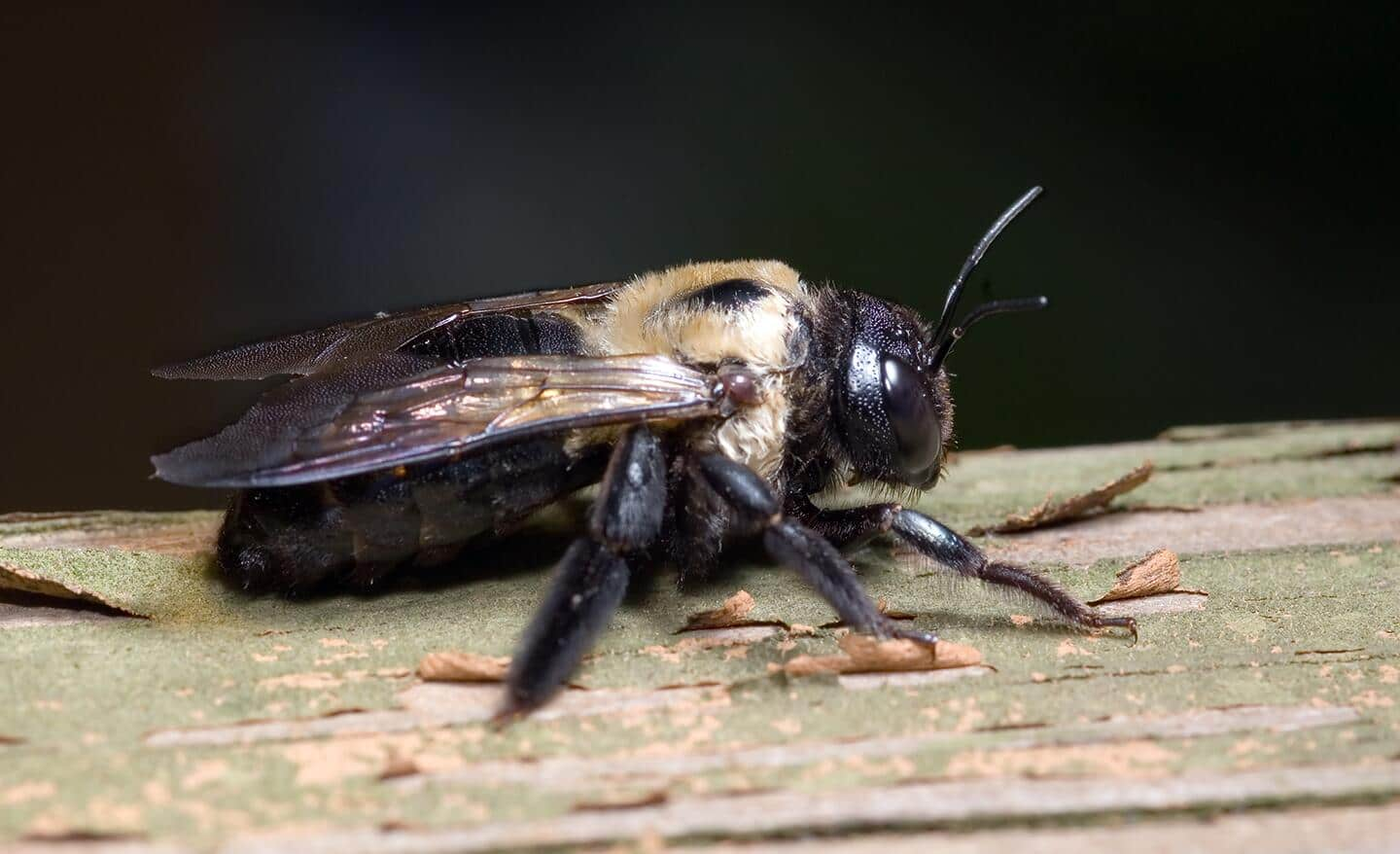
Round holes in exposed wood, fresh sawdust below them and bees returning to the same opening are useful signs of carpenter bee nesting. In Overland Park, the place to focus is the affected wood, not every bee in the garden. Record active holes before discussing treatment or repairs with Frontier Trapper.
What should you look for around a porch or deck?
- Round openings in fascia, porch ceilings, railings or other exposed wood.
- Fresh wood debris beneath an opening, especially when bees repeatedly enter it.
- Hovering near the same board, combined with actual entrance activity.
- New openings or renewed traffic in wood that was affected previously.
Carpenter bees often have a shiny upper abdomen, unlike the fuzzy abdomen of a bumble bee. Neither hovering nor a hole on its own proves current nesting. Note the combination of signs and avoid probing the opening.
Before treating a bee concern, compare appearance and nesting behavior. Large bees on flowers may have no connection to damaged wood.
Distinguish carpenter bees from bumble beesWhy do carpenter bees return to certain boards?
Bare or weathered wood can offer nesting material, and existing galleries may be used again. Repeated use can extend damage within the board. Finishing exposed wood can make it less attractive for nesting, but it is not a guarantee that bees will never use the structure.
How much does an entry hole tell you about damage?
The entrance shows where the gallery begins, not its full extent. Several holes do not automatically mean a deck is structurally compromised, and weathering or rot may also affect the wood. Separate the question of active bee nesting from the question of whether a component needs repair or replacement.
What should happen before you seal or paint the wood?
- Identify currently used entrances from a distance and photograph the affected boards.
- Arrange assessment if nesting continues, access is difficult or the insect is uncertain.
- Ask when the openings can be repaired after activity has been addressed.
- Confirm whether the proposed service includes repairs or only bee management.
- Maintain the repaired finish and monitor for new holes or fresh debris.
Wood maintenance is most useful after active nesting has been assessed. Review practical prevention measures before planning repairs.
Explore ways to reduce carpenter bee drillingWhich surfaces are worth monitoring during routine upkeep?
Concentrate on exposed wooden components rather than searching every surface of the house. Porch ceilings, fascia edges, railing undersides and wooden trim can be examined from the ground or another normal viewing position. Weathered finishes and previously affected boards deserve particular attention. Do not climb to investigate a hole beneath high eaves. If the site is above reach, note its position relative to a window or corner so a provider can discuss access without requiring a close inspection by the homeowner.
What is the difference between an entrance and a gallery?
The entrance is the opening visible on the wood surface; the gallery is the nesting tunnel within the wood. A round opening does not reveal how far that tunnel extends or whether it connects with older excavation. Bees moving in and out establish current use more clearly than the appearance of the hole. Avoid scraping away wood to expose the interior before assessment. Altering the board can remove useful evidence and create a repair task before the nesting activity has been addressed.
How should you interpret sawdust or staining?
Fresh debris beneath a repeatedly used entrance can support a carpenter bee assessment, but debris alone needs context. Recent drilling, weathering and other wood-related activity can leave material on a porch. Note whether the debris returns and whether bees are entering above it. Staining by itself does not establish an active gallery or the extent of damage. Photograph the affected area before routine cleaning, then compare later observations without handling the opening or disturbing an insect using it.
What should a seasonal monitoring routine include?
Use ordinary maintenance occasions to compare the same boards over time. A photograph taken when outdoor furniture is brought out can serve as a reference during later deck cleaning or trim maintenance. Label known holes on a sketch rather than marking or plugging active entrances. Record new activity separately from old defects. This approach avoids assuming that an old hole is a new problem each time it is noticed, while still making fresh debris or renewed traffic easier to describe when requesting help.
How can repairs and prevention be coordinated?
Discuss the order of work before a painter or carpenter closes the affected openings. Active nesting needs assessment first; the timing of filling, refinishing or replacement should follow that assessment. Explain whether the wood is decorative, part of a railing or part of another structural component. Once work is complete, retain the photographs and repair details so later observations can be compared with the finished condition. Maintaining surfaces can reduce favorable nesting conditions, but follow-up observation remains useful because adjacent untreated wood may still be available.
When is a professional assessment useful?
Contact Frontier Trapper when fresh holes recur, bees repeatedly enter inaccessible trim or activity interferes with a frequently used porch. Describe where the wood is located, how long the activity has continued and whether repairs are already planned. For a Johnson County property, this helps keep the service discussion focused on the affected area rather than assuming the whole exterior needs treatment.