

Your Yard Has Tunnels — Here's What to Do About It
How to find and hire a vole exterminator near you:
- Call a local wildlife or pest control specialist — licensed professionals with rodent experience
- Request a same-day or next-day inspection — vole populations grow fast
- Ask for a customized treatment plan — trapping + habitat modification + exclusion
- Confirm follow-up visits are included — one treatment rarely enough
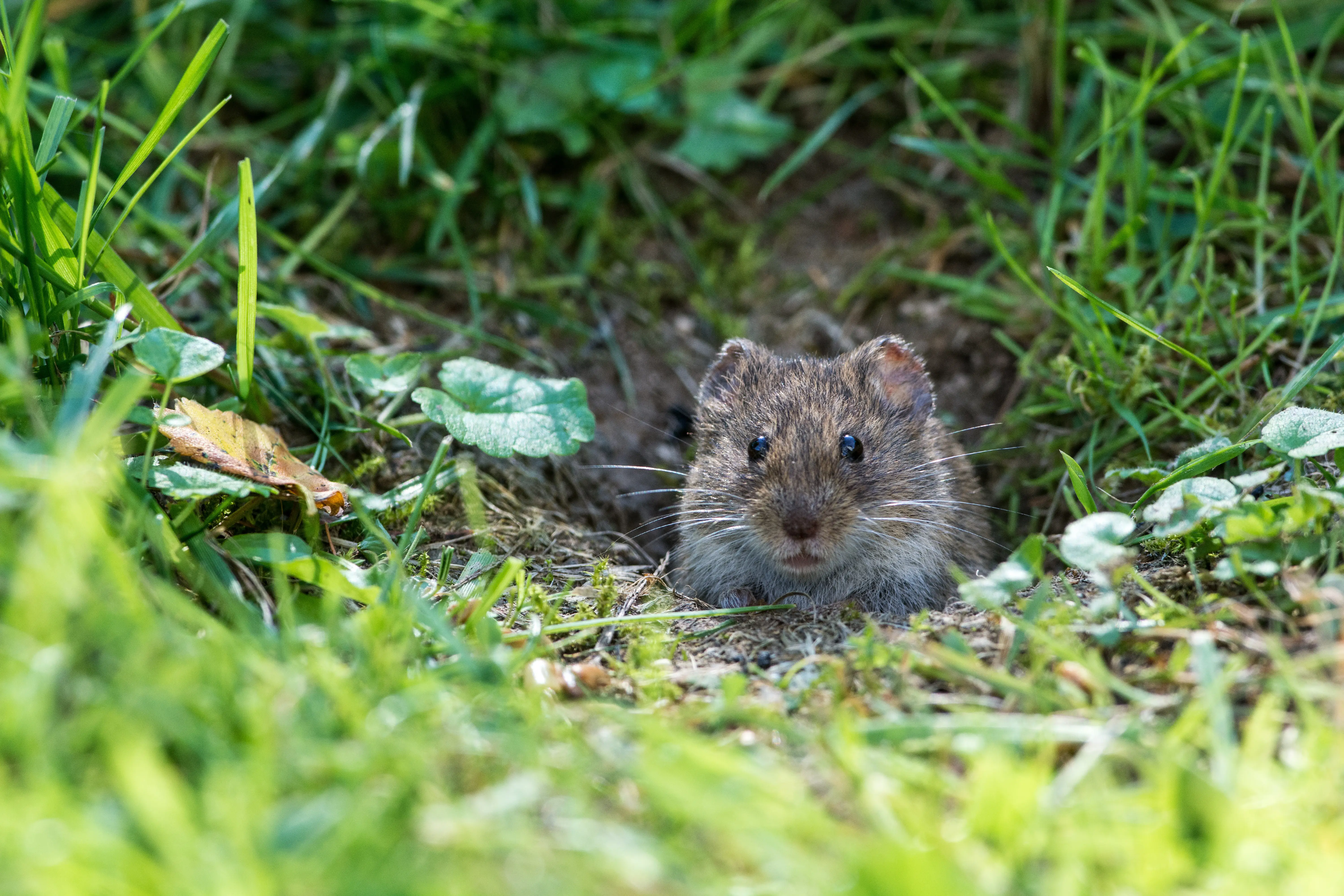
Voles are small, mouse-like rodents that tunnel through yards, chew plant roots, and strip bark from trees. A single female can produce up to 100 offspring in a short period. Active year-round in Kansas City—including under snow cover in winter when homeowners don't realize damage is happening.
Identifying the Culprit: Voles vs. Moles, Mice, and Gophers
A vole measures 5–8 inches long. Unlike house mice, voles have shorter tails, smaller ears, and stockier "sausage-shaped" bodies. Locally, we primarily see Prairie Voles and Meadow Voles.
Distinguishing Vole Runways from Mole Tunnels
Moles push up earth creating "ridges" or "veins." Voles stay on top of soil under vegetation cover, creating "grass paths"—1-to-2-inch tracks where they've clipped grass to roots. Paths lead to shallow burrow openings about silver-dollar sized.
A single burrow system can span over 2,000 feet with multiple entrances, often tucked near garden bed edges or under mulch.
Signs of a Vole Infestation and the Damage They Cause
Lawn destruction: As snow melts, homeowners discover a maze of trails. Snow provides a 32°F blanket protecting voles from predators—they eat grass down to the crown all winter.
Garden and tree damage: Voles "girdle" trees—gnawing bark at the base or just below soil. Complete circles cut off nutrient supply, slowly killing trees. They also love flower bulbs.
Health Risks to Humans and Pets
Voles rarely enter homes but carry:
- Tularemia: Bacterial disease from skin contact or insect bites
- Hantavirus & Salmonella: Through droppings or urine contact
- Plague: Rare but possible with wild rodent populations
Also host fleas and ticks transferable to dogs and cats.
Why You Need a Vole Exterminator Near Me
A single female has up to 10 litters a year, 3–6 young per litter, reaching breeding age in weeks. Under right conditions, a couple of voles produces 100+ offspring in a single season.
This prolific breeding is why DIY fails. Catch 2–3 voles—20 more are being born in the burrow.
When to Call a Vole Exterminator Near Me
- "Dead" paths in grass that don't green up
- Gnaw marks at the base of shrubs or young trees
- Garden plants wilting (roots eaten)
- DIY repellents or traps haven't stopped tunnel progress
Professional Vole Removal and Prevention Strategies
- Humane trapping & baiting: Specialized setups placed in travel paths; tamper-resistant bait stations
- Carbon monoxide treatments: Specialized equipment inject CO into burrow systems—fast, effective, humane
- Exclusion barriers: Steel mesh cylinders (hardware cloth) buried several inches around tree bases
Long-Term Prevention and Habitat Modification
- Lawn maintenance: Keep grass cut short, especially in fall
- Debris clearing: Remove woodpiles, deep mulch, tall weeds near foundations
- Soil cultivation: Tilling destroys shallow burrow systems
- Fencing: 1/4-inch mesh buried 6 inches deep for vegetable gardens
How much does vole extermination cost?
Varies by property size and colony establishment. Small yard in Mission Hills with new problem is cheaper than multi-acre Gardner property with 2,000-foot tunnel system. Clear estimates after inspection.
Are your methods pet-safe?
Are your methods pet-safe?
Yes. Baiting stations designed inaccessible to dogs and cats. Trapping methods targeted specifically to vole runways.
Can I just use castor oil or mothballs?
Can I just use castor oil or mothballs?
Castor oil offers temporary relief but rarely solves major infestations. Mothballs are illegal in soil in many jurisdictions and contaminate ground. Professional intervention is the only way to address the entire population.
How quickly can a professional resolve a vole problem?
After initial inspection and setup, significant activity drop within the first week. Follow-up visits over 14–21 days to ensure no stragglers and break the breeding cycle completely.
Conclusion
A vole problem is frustrating, especially after investing in a beautiful lawn. Frontier Trapper provides fast, humane wildlife removal with permanent solutions across Lee's Summit, Blue Springs, and Overland Park—same-day service, 100% satisfaction guarantee.