

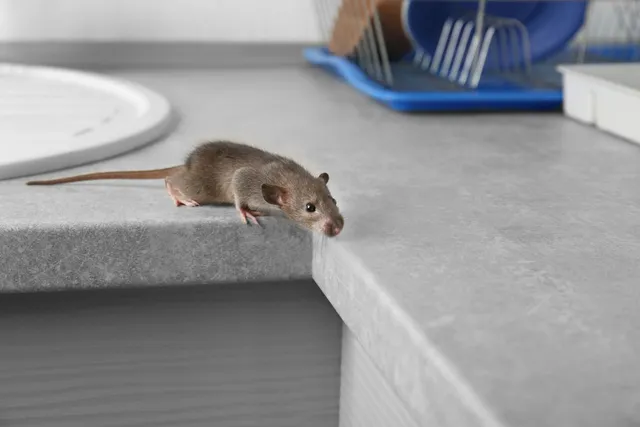
Mice removal starts with confirming activity, locating the routes into and through the home, and addressing the food and shelter that support it. Catching a mouse is only part of that work. In Overland Park, describe the signs and affected rooms when asking Frontier Trapper about an assessment; the next step depends on the property.
Signs that justify a closer look
| Sign | Where you might notice it | Question to investigate |
|---|---|---|
| Small droppings | Cabinets, stored goods or floor edges | Which animal left them and where is it traveling? |
| Gnawed packaging | Food storage or pet-food areas | Is the food accessible and what route leads to it? |
| Shredded nesting material | Sheltered storage spaces | Is the location occupied or an older nest? |
| Scratching | Walls, ceilings or connected voids | Does other evidence confirm mice? |
UC IPM identifies droppings, gnaw marks, tracks and sheltered nests as useful mouse evidence. Sounds and odors need context. If the only evidence is a recording, start with the location and timing rather than treating it as a confirmed species identification.
Look for routes at several levels of the home
The CDC notes that mice can enter through an opening about a quarter inch across. A review should therefore include small utility gaps and door edges as well as obvious damage. Check accessible areas around pipes and cabinets, garage doors and exterior penetrations. Do not climb onto a roof or dismantle equipment to finish a homeowner checklist.
A professional exclusion assessment can connect the inside signs with outside openings. Simply plugging the hole nearest one trap may miss another route. If activity is inside a wall, mice in the walls explains what to record without opening the cavity.
Prepare for an assessment
Seeing signs of mice in your Overland Park home? Frontier Trapper can inspect activity, identify entry routes and create a removal and prevention plan.
Explore Mice Removal Services- List the affected rooms and the dates you first noticed activity. Photograph visible damage without moving waste.
- Store accessible food in closed containers and clean ordinary food spills. Keep children and pets away from suspected waste and control devices.
- Tell the provider about any traps or products already used and where they are. Keep product labels available.
- Ask how the plan combines control, checking for continued activity and entry-point repair. Confirm which areas cannot be accessed.
- Discuss cleanup separately, including whether the affected material is washable or porous.
Ask for a defined scope
Control and follow-up
Ask which method is proposed, how it will be kept away from pets and children, and how the provider will judge progress. This article does not promise a particular device or completion time. A change in activity may require reassessment rather than another identical placement.
Cleanup and damaged material
For a small deposit on a washable surface, start with the mouse droppings cleanup guide. For overhead activity or affected insulation, read mice in the attic and discuss attic remediation if inspection supports it. Neither a mouse sighting nor an older deposit automatically means whole-attic replacement.
Contact Frontier Trapper about mice removal in Overland Park. Ask about current scheduling and the assessment process. The purpose is a plan for the observed problem, not an assumed package based on an online price or response-time claim.
What useful follow-up should tell you
Follow-up should do more than repeat the first visit. Ask how the provider will compare activity over time, check devices, reassess affected rooms and decide whether the plan needs to change. A quieter night or one capture does not by itself confirm that the route into the home has been addressed. Useful documentation identifies what was observed, what work was completed and which signs should prompt another call.
Prioritize entry repairs by evidence
A long list of small exterior gaps can be overwhelming. Start with openings that connect to confirmed activity, then review other vulnerable penetrations as part of the prevention plan. Ask which repairs are included, what materials are proposed and whether another trade is needed for doors, roofing or utilities. This keeps exclusion work tied to the building rather than treating every visible seam as proof of mouse entry.