
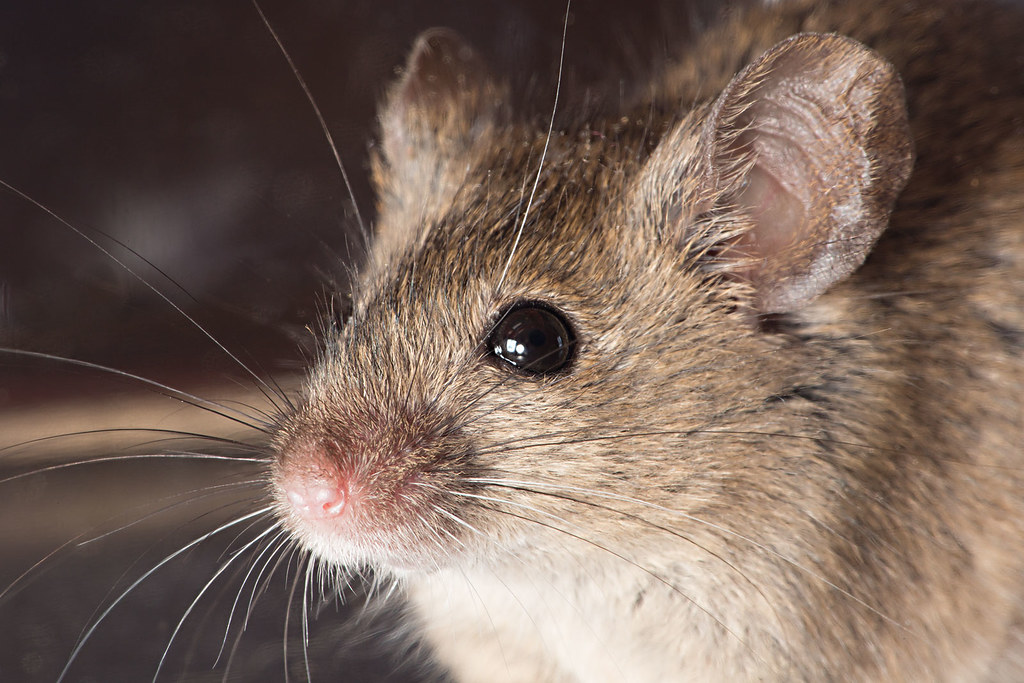
Possible mouse droppings should be left undisturbed until you have a cleanup plan. Keep children and pets away and do not dry sweep or vacuum them. Small rodent pellets can be difficult to identify from appearance alone. A limited deposit on a washable surface and a heavily affected attic require different responses.
Is it really mouse droppings?
Small dark pellets beside food, cabinets or a floor edge can suggest mice, especially with gnaw marks or a clear sighting. Seeds, debris and other animal waste can be confusing. Do not crush a pellet or handle it to test freshness. The squirrel, mouse and rat droppings guide explains why comparison charts cannot give a certain identification.
| Setting | Response |
|---|---|
| Small deposit on a washable surface | Follow current CDC cleanup guidance and the disinfectant label. |
| Waste in insulation, a hidden void or a large area | Pause and ask for a professional cleanup assessment. |
| Repeated larger deposits that may be a raccoon latrine | Do not assume ordinary rodent cleanup is sufficient. |
| Someone may have had direct exposure | Seek advice from a healthcare professional or public health department. |
Why the cleanup method matters
Rodent waste can contain germs, but appearance does not tell you whether a particular deposit is infectious. Avoid disturbing dust and do not diagnose a health condition from a household finding. Tell a healthcare professional about a relevant exposure if you need medical advice.
Small hard-surface deposits: follow CDC guidance
If droppings point to an active mouse problem, Frontier Trapper can assess the affected areas, find likely entry routes and recommend removal and prevention work.
Explore Mice Removal ServicesThe following summarizes CDC rodent cleanup guidance. It is not a method for a heavy infestation or contaminated insulation. For a closed building, CDC advises opening doors and windows for 30 minutes and leaving during ventilation, where safe to do so.
- Wear rubber or plastic gloves.
- Wet the waste thoroughly with an EPA-registered disinfectant. Leave it for five minutes or the contact time specified on its label.
- Lift the wetted material with paper towels and place them in a covered garbage container.
- Disinfect the washable surface according to the product label.
- Clean gloved hands before removing gloves, then wash bare hands with soap and water.
Use products only as their labels direct, including surface compatibility and ventilation. Keep children and pets out of the cleaning area. Do not mix cleaning products. If the waste is inaccessible or the setting does not fit this limited example, stop and obtain advice for that setting.
When to stop and ask for help
A recurring deposit, widespread nesting, affected porous material or a space you cannot safely enter needs more than a quick wipe. Describe the location and extent without disturbing it. Ask which areas can be cleaned, which materials may need removal and how the animal activity will be addressed.
A suspected raccoon latrine needs the separate approach explained in raccoon droppings and cleanup. For activity overhead, read mice in the attic. Contact Frontier Trapper about mice removal and, when inspection supports it, attic remediation. Cleanup should be coordinated with preventing another entry.
Document the cleanup boundary before starting
Before disturbing anything, look at the surrounding area and decide whether the deposit is truly limited to an accessible washable surface. Check visually for nearby nesting material, affected stored goods or waste extending beneath appliances and into cavities. Do not move contaminated boxes simply to complete the inspection. If the boundary is unclear, pause and describe the setting to a professional; the safe plan for a small counter deposit is not automatically suitable for a closet, HVAC area or insulated attic.
Prevent the cleaned area from becoming contaminated again
Cleaning removes visible waste but does not correct the route or attraction that allowed activity. After the area is addressed, store food securely, correct ordinary spills and have likely entry points evaluated. Keep a record of where the deposit was found and report any new evidence rather than repeatedly treating the same surface. Recurrence can help identify an active travel route, while no new evidence over time supports the broader control and exclusion assessment.