

Brown recluse and black widow spiders deserve caution in Kansas, but most spider sightings do not identify either one. Size, a dark body or a messy web is not enough to judge a spider. Overland Park homeowners can respond usefully by avoiding direct contact, documenting recurring sightings and getting identification before choosing treatment.
Which identification clues are useful?
- Brown recluse: a plain tan-to-brown body and violin-like marking can be clues, but neither is sufficient alone.
- Black widow: adult females often have a glossy dark abdomen with a red hourglass marking underneath. Appearance varies with age and sex.
- Unknown spider: use a photograph if available, but do not handle or turn the spider over to check markings.
Brown recluses often use undisturbed indoor storage areas. Widows can use sheltered places such as garages, woodpiles and protected outdoor corners. A hiding place is only context, not a species identification.
If the concern is a suspected recluse, use several identification clues and keep a record of sightings rather than relying on a brown body color.
Read the Kansas brown recluse guideWhat do homeowners commonly mistake for danger?
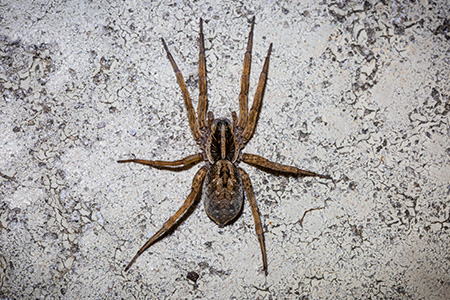
A large spider is not automatically a recluse or widow. Wolf spiders, for example, are a different group and should not be labeled dangerous solely because they look substantial. A spider moving across a floor also does not prove it is approaching a person intentionally.
The word venomous does not by itself describe the likelihood of a harmful encounter. Avoid trying to rank an unidentified spider by appearance. The practical question is what it is, where it was found and whether similar sightings are continuing.
What should you do after an uncertain sighting?
- Leave the spider undisturbed and avoid picking it up.
- Note the location and photograph it only if you can do so without direct contact.
- Keep track of repeat sightings rather than drawing conclusions from one encounter.
- Ask for identification when the features are unclear or a recluse or widow is suspected.
How can you reduce encounters around the house?
In Johnson County homes, routine storage and exterior maintenance can make hiding places easier to inspect. Keep belongings organized, repair screens and gaps, and avoid reaching into concealed spaces around stored equipment or wood. Reducing recurring insect activity may also reduce available prey.
Start with entry gaps and the rooms where spiders repeatedly appear. These changes are useful alongside any inspection or treatment plan.
Explore practical spider preventionWhat does medically significant mean for a homeowner?
Medically significant describes a potential consequence of a bite, not a prediction that a particular spider will bite or that every encounter causes harm. Brown recluses and black widows merit identification and care around concealed spaces. The practical response remains to avoid direct contact and document the pest concern. A pest identification discussion is not a medical diagnosis, and an unexplained skin mark cannot establish which spider, if any, was involved. Keep the questions of household activity and personal health separate when deciding whom to contact.
Which property conditions are useful to note?
Shelter, access and food help explain spider activity more clearly than a general label such as dangerous. A garage with gaps beneath a door has a different inspection context from a closed bedroom where sightings recur. Note stored equipment, infrequently moved containers, screen damage and recurring insects around windows. Do not assume moisture explains every species: a damp corner and a dry storage space may support different conditions. Share the actual room features so identification and property observations can be considered together.
How should you think about webs and egg sacs?
Webs and egg sacs can indicate spider activity, but neither reliably establishes a medically significant species. An old web may remain after its occupant is gone, and not all spiders rely on conspicuous prey-catching webs. Note whether a web returns after ordinary cleaning and where any sacs appear. Avoid handling an unknown sac or the materials around it to inspect its contents. Repeated signs are useful for locating activity even when they cannot settle the identity of the spider responsible.
What does a practical garage or shed check involve?
Look at accessible door seals, screens and storage arrangements during normal use of the space. Keep a clear route to shelving and avoid placing hands where visibility is poor. Gloves for ordinary outdoor work do not replace looking before reaching into wood or equipment. Inspect stored items visually before carrying them into living areas, especially when the items have been undisturbed. If you notice a suspected widow or recluse, leave the immediate hiding area intact and seek identification rather than trying to expose it.
What should you expect from an inspection discussion?
An inspection discussion should distinguish confirmed identification from suspicion and explain the areas that can actually be assessed. Tell the provider if sightings involve bedrooms, a shared storage area or outdoor structures so access can be planned. Ask what preparation is needed and whether treatment decisions depend on finding additional evidence. If activity continues afterward, record the same details used before the visit. Comparable observations make follow-up more informative than changing the description from one unidentified spider to a whole-house infestation without new evidence.
When can Frontier Trapper help?
Contact Frontier Trapper about suspected recluse or widow sightings, repeated indoor activity or uncertainty about a spider in an occupied area. Describe the rooms affected and what you have observed. An Overland Park spider service discussion should begin with identification and the extent of activity, without assuming every spider requires extermination.