
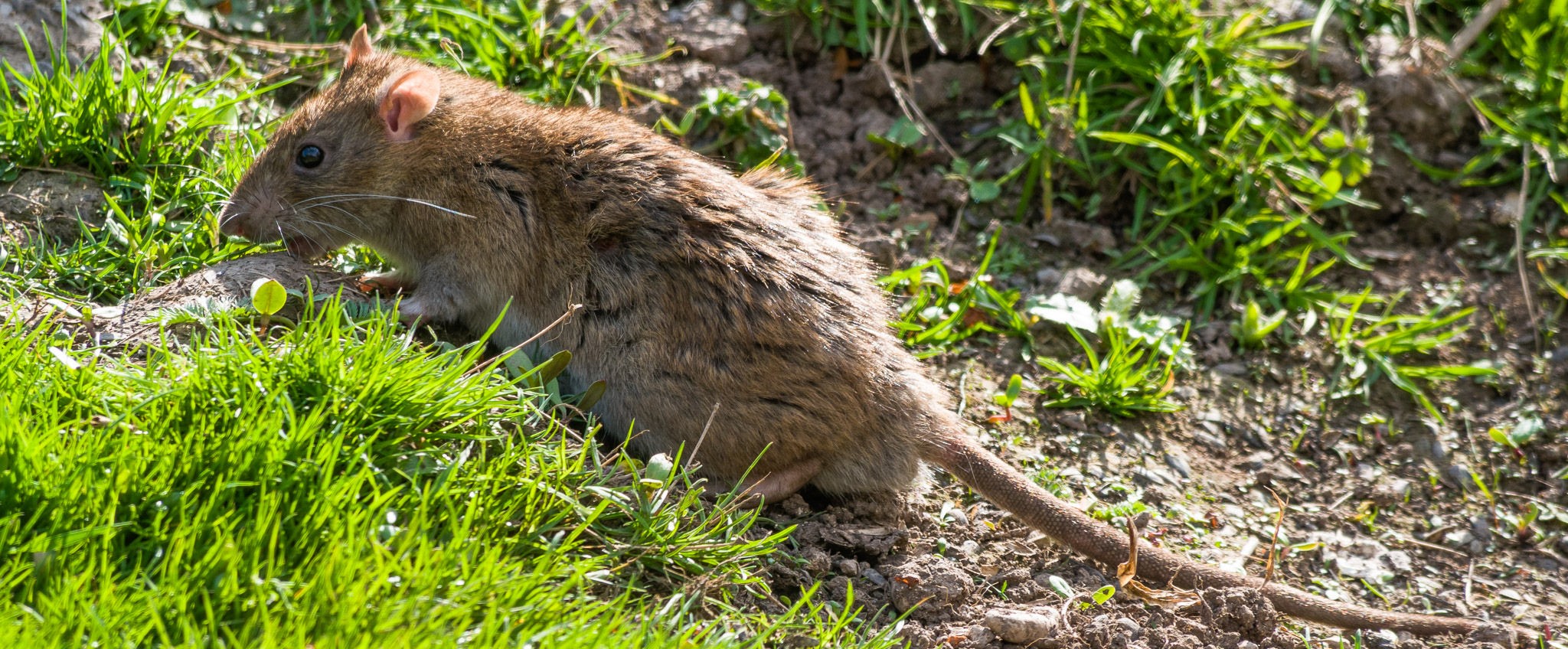
An adult rat is generally larger and more heavily built than a house mouse, but a young rat can be mistaken for a mouse. Use the whole animal’s proportions, a clear view of its tail and supporting signs rather than body size alone. You do not need to catch or approach a rodent to ask for identification help.
Compare the animal’s proportions
| Feature | House mouse | Rat |
|---|---|---|
| Overall build | Small and relatively delicate. | Adults are larger and more robust. |
| Head and feet | Ears can look large relative to the head; feet look small. | A young rat may have comparatively large feet and a heavier head. |
| Tail | Long and sparsely haired. | Also long and sparsely haired; proportion varies by rat species. |
| Age uncertainty | A small rodent is not automatically a house mouse. | A juvenile can overlap with a mouse in apparent size. |
UC IPM cautions that a young rat can be confused with a mouse and describes different rat species with different proportions. A quick nighttime glimpse, enlarged phone image or partial view often omits the useful features. It is better to report “unidentified rodent” than to select a treatment from an uncertain sighting.
What the location tells you
A kitchen, garage or attic is the location of the observation, not a species test. Ask how the animal reaches that area and what other evidence matches the sighting. For Overland Park homeowners, the most useful local detail is the building itself: where food is stored, where a utility line enters and which rooms connect to the activity.
Collect information without handling the animal
Not sure which rodent is in your home? Frontier Trapper can inspect the evidence, identify likely activity and recommend the right removal and exclusion approach.
Explore Mice Removal Services- Save clear existing footage if available. A side view showing the head, feet and tail is more useful than a close crop of the face.
- Note where and when the animal was seen and whether it entered an opening.
- Describe nearby gnawing or waste without touching it. Record earlier control products or devices.
- Ask the inspector which findings support the identification and whether another species needs to be considered.
Droppings can support an assessment but are not an infallible key. The droppings comparison guide explains the overlap; mouse droppings and cleanup addresses a limited household cleaning situation after the setting has been assessed.
Why the distinction matters for the plan
The route and control setup
Equipment, placement and exclusion work should fit the confirmed animal and the site. Ask how the plan prevents access by children, pets and other animals. Do not assume that a product marketed for “rodents” fits every situation or that a catch confirms all entrances have been addressed.
Service and follow-up
If mice are confirmed, the Overland Park mice-removal guide explains what to ask before arranging help. Use the mice service page or rat service page as appropriate. If the issue is overhead, the attic guide separates identification from cleanup and restoration decisions.
Why a young rat can complicate identification
Body size alone can mislead when the animal is young or seen only briefly. Proportions, tail appearance, head shape, tracks, droppings and the setting should be considered together, and even those clues may require professional interpretation. Avoid selecting a control method from a single comparison photo found online. A plan designed around the wrong animal may overlook different travel routes, device requirements or entry points.
Build an identification record without collecting samples
Write down where and when you saw the animal, its approximate proportions and the direction it traveled. Photograph visible gnawing, tracks or waste from a safe distance without touching or rearranging the evidence. Include nearby food, water and structural openings in the description. This creates a useful record for the inspection while avoiding exposure and preserving the relationship between each sign and the place it was found.