
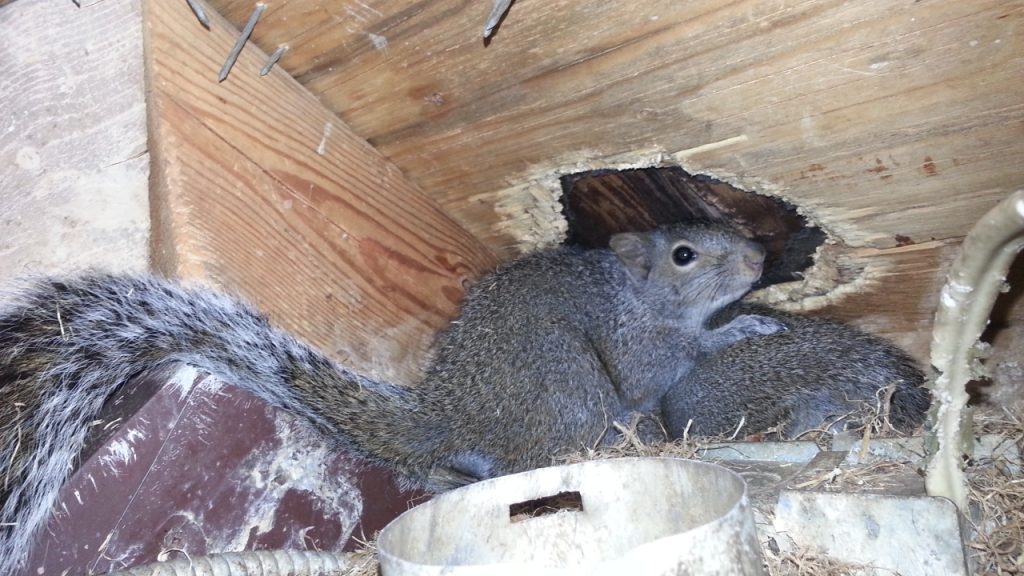
A squirrel in the attic may leave repeated roof-level activity, gnawed openings and movement above the ceiling. Noises alone cannot confirm the animal. Keep people and pets away from the access area, record what you can observe safely, and have the attic and entry point assessed before sealing anything.
Signs worth checking together
| Observation | What it can tell you | What it cannot prove |
|---|---|---|
| An animal entering a roof opening | A specific opening is in use. | That the entire attic has been checked. |
| Scratching or running overhead | There is activity near a ceiling or void. | Which species is present. |
| Gnawed trim or vent edges | A possible access or damage location. | That squirrels alone caused it. |
| Nesting material or droppings | An area may have been occupied. | Whether the occupants are still there. |
K-State describes fox squirrels, gray squirrels and southern flying squirrels in Kansas. Their behavior is not identical, so a daytime-versus-nighttime rule should not be used as a diagnosis. Compare several clues, and use a clear sighting or inspection to support identification.
What to do before the inspection
- Write down the time, approximate location and duration of the noise. Note separate areas rather than assuming every sound comes from one animal.
- From the ground, look for repeated movement at vents, soffits or roof edges. Take a photograph only if you can do so without approaching the animal.
- Keep the attic hatch closed to household traffic. Do not move nesting material or reach into hidden spaces.
- Arrange an assessment of the occupied area and the access point, including whether dependent young may be present.
Removal and exclusion need to be planned together
Hear activity above the ceiling? Frontier Trapper can inspect the attic, identify the entry point and build a squirrel removal and exclusion plan for your home.
Explore Squirrel Removal ServicesPermanent closure belongs after the occupants have been accounted for. One squirrel leaving the roof does not establish that a nest is empty. K-State and Penn State both caution against shutting squirrels into a building. Ask the provider how the result will be checked before the final repair.
Frontier Trapper’s squirrel service page describes removal and prevention work. Discuss the actual method and scope for your home rather than assuming one device fits every attic. The cost-factor guide can help you compare written estimates for access, follow-up and repairs.
Assess damage separately from noise
Wiring, wood and insulation
Tree squirrels can damage wiring and building materials. Visible electrical damage requires assessment by an appropriate professional; do not handle chewed wires. Insulation condition also needs inspection. Activity in an attic does not automatically mean all insulation must be removed.
Cleanup and preventing another entry
Ask for the affected area to be documented and for an explanation of any proposed attic remediation. Then review entry-point repairs so the removal and repair scopes agree. If the animal has not been identified, use the squirrel-versus-rat attic guide to understand the limits of sound-based guesses.
How vacancy should be verified before sealing
A quiet attic is not the same as an empty attic. Ask what evidence will show that all animals have left and how the provider accounts for hidden nesting areas or dependent young. The answer may involve observations, inspection findings and follow-up rather than one moment without noise. Permanent repair should be coordinated with that verification. Closing an opening too early can trap an animal inside, while leaving a confirmed route open after removal invites another entry.
What to monitor after repairs are completed
Keep the original activity log for comparison after the entry point is repaired. Note renewed sounds, fresh damage or movement at another roof edge, but remember that normal house noises can continue. From the ground, look for displaced repair material or a new route nearby and report changes promptly. Follow-up is also a good time to confirm which damaged building materials, if any, still need attention from a roofer, electrician or remediation provider.