

Skunk Den Under the Deck: Safe Removal and Why Rabies Matters
A musky smell settles over the yard, a burrow appears under the deck or shed, and you realize a skunk has moved in beneath your home. It is a common Overland Park problem, especially in late winter and spring, and it is one of the few wildlife situations where the wrong DIY move can get you sprayed, bitten, or exposed to rabies. Here is what a denned skunk means, the warning signs to watch for, and the safe way to resolve it.
Why Skunks Den Under Structures
Skunks are poor climbers but excellent at using ground-level shelter, and the space under a deck, shed, porch, or slab is close to ideal: dark, enclosed, protected from weather and predators, and usually undisturbed. It becomes especially attractive in late winter and spring, when females are looking for a secure place to have and raise their young. Add an easy food supply nearby — grubs and insects in the lawn, pet food, unsecured garbage, or fallen birdseed — and your deck becomes a natural den site.
How to Know a Skunk Is Denning There
- A persistent musky odor around the deck, shed, or porch, present even without a full spray and spiking when the animal is disturbed.
- A burrow 6 to 8 inches across with a fan of excavated dirt at the entrance under the structure.
- Cone-shaped holes and shallow diggings across the lawn where the skunk has rooted for grubs.
- Flattened, worn paths leading to and from the den entrance.
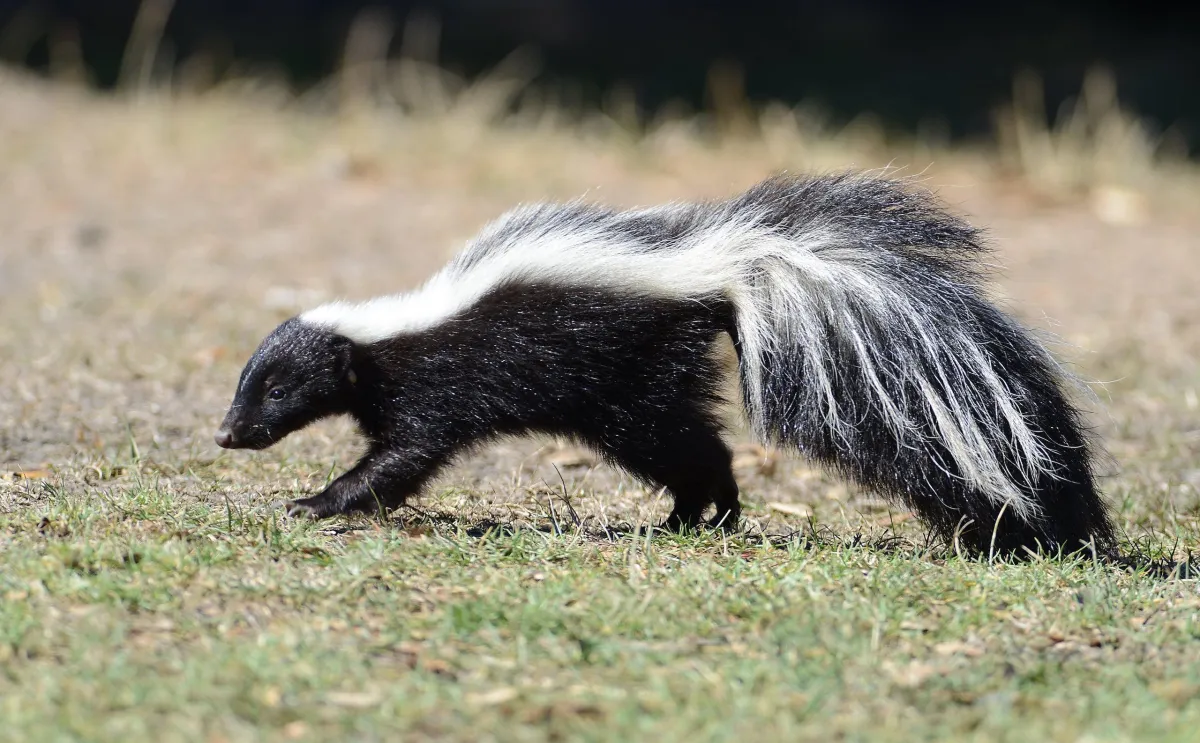
- Nighttime sightings of a black-and-white animal moving slowly to or from under the structure at dusk or after dark.
- Tracks showing five toes with claw marks near the den or food sources.
Read the Spray Warning Before You Get Close
Skunks would rather warn than spray, and they give a clear, escalating display before they let loose. If you see it, back away slowly and give the animal space — it is about to spray, and it can hit a target up to about 10 feet away with accuracy:
- Foot-stamping with the front feet.
- Hissing and a raised, arched back.
- Tail raised — the final warning before spraying.
- Turning its rear toward you, since that is the business end.
Cornering a skunk, or letting a curious dog rush the den, is the fastest way to trigger a spray. Always leave a skunk a clear escape route and keep pets well away from the den entrance.
Why Rabies Makes This More Than a Nuisance
This is the part that separates a skunk from most other under-the-deck wildlife. Skunks are one of the primary carriers of rabies in Kansas, which raises the stakes on both handling and pet exposure. A denned skunk against your home means a rabies-vector animal in close contact with your yard, pets, and family. Any skunk that is active in broad daylight, disoriented, unusually bold or tame, staggering, or aggressive should be treated as a possible rabies case — do not approach it, keep everyone away, and report it. Even a healthy skunk carries disease and parasite risks, including canine distemper, roundworm, fleas, and ticks, which is why direct handling is never worth the risk.
Why DIY Skunk Removal Goes Wrong
- Sealing the den too soon. From spring onward there are often young in the den that cannot leave; blocking the entrance traps and kills them, leaving a far worse odor and mess.
- Trapping without experience. A trapped skunk sprays, and the rabies-vector status makes handling genuinely hazardous without the right equipment and training.
- Flushing or poking the den. This corners the animal and reliably triggers a spray, and it can provoke a defensive bite.
- Letting pets investigate. A curious dog is the most common way households end up with both a sprayed pet and a possible rabies exposure.
- Ignoring it. A denned skunk brings ongoing odor, digging, spray risk, and, if a female, a growing litter right against the house.
A skunk denning under your deck is a spray and rabies risk best handled by pros. We remove it safely, confirm no young are trapped, seal the den, and treat the odor.
Explore Skunk Removal in Overland ParkThe Safe Way to Resolve It
Professional skunk work follows a careful sequence built to avoid a spray and manage the rabies risk. An inspection first confirms the den and whether young are present. The skunk (and any young) is then removed using humane techniques suited to skunks and carried out by licensed technicians with the right equipment, in compliance with Kansas wildlife regulations. Only once the den is confirmed empty is the space under the deck, shed, or porch sealed with dig-proof, trenched barriers so skunks and other animals cannot re-establish. Finally, den waste and contaminated material are cleaned up and the lingering odor is treated.
That order matters: never seal a den until it is confirmed empty, or you trap young inside. Confirming that reliably, without getting sprayed, is exactly what a professional brings to the job.
Keeping Skunks From Coming Back
Once the den is empty and sealed, prevention is about removing food and shelter. Treat the lawn for grubs to cut a primary food source and reduce the digging, feed pets indoors and secure garbage and compost, clear brush and wood piles near the house, and keep the spaces under decks, sheds, and porches closed off with proper dig-proof barriers. A yard with no easy den and no easy meal is one skunks pass by. And if the smell is your main concern right now, our guide on getting rid of skunk smell covers the cleanup side in detail.