
Which Birds Can You Legally Remove? Pigeons, Starlings and the Law
Before you knock down that nest or try to clear the birds off your building, there is one question that has to come first, and getting it wrong can carry federal penalties: is this bird legally protected? Most people are surprised to learn that the great majority of birds in Kansas cannot legally be harmed or have their nests disturbed. Only a small handful of introduced species can be actively controlled. Here is how the law works and why correct identification is step one of any bird problem.
The Migratory Bird Treaty Act
The key law is the federal Migratory Bird Treaty Act (MBTA). It protects the vast majority of native bird species in the United States, and its protection is broad: it is illegal to kill or harm these birds, and it is illegal to disturb, move, or destroy an active nest — meaning a nest with eggs or young in it. That covers far more birds than most homeowners expect, including robins, swallows, woodpeckers, killdeer, geese, ducks, and virtually every native songbird. For these species, "removal" is not on the table; the legal path is deterrence, exclusion, and timing.
The Birds You Can Legally Control
A short list of birds are not protected under the MBTA, because they are non-native species introduced to North America. These are the true "pest birds," and they happen to be the ones responsible for most building conflicts:
- Pigeons (rock doves). Plump gray birds that roost and nest on ledges, rooftops, signs, and under bridges and solar panels, leaving heavy droppings. Not protected.
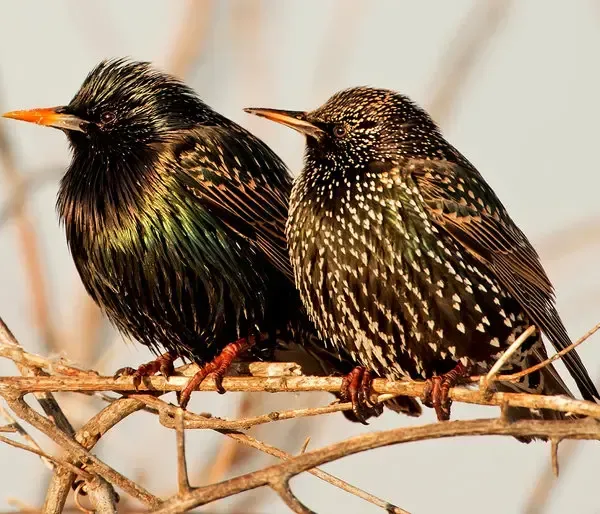
- European starlings. Dark, glossy, stocky birds that aggressively pack nests into vents, soffits, and cavities and gather in large, noisy flocks. Not protected.
- House sparrows. Small brown-and-gray birds that stuff nests into eaves, signage, vents, and any small cavity around buildings. Not protected.
These three introduced species can be actively controlled, and they are exactly the birds most often behind droppings, blocked vents, and nesting messes on Overland Park homes and businesses.
The Birds You Cannot Touch (Even When They're a Nuisance)
Some native birds cause real headaches but are still fully protected, so they require legal, timing-based solutions rather than removal:
- Woodpeckers drumming on siding and drilling holes — protected; addressed with deterrents and exclusion, not removal.
- Barn and cliff swallows building mud nests under eaves — protected; nests can only be removed before eggs are laid, and deterrents must go up early.
- Robins and other songbirds nesting in inconvenient spots — protected; the nest must be left alone until the young fledge.
- Canada geese fouling lawns and ponds — protected, with specific regulated exceptions; managed through deterrence and, where permitted, licensed programs.
- Killdeer nesting on gravel and open ground — protected, including their eggs laid right out in the open.
The pattern is clear: nuisance does not equal unprotected. A bird being a problem has no bearing on whether the law protects it.
Why This Makes Identification Step One
Because the legal line runs between a few introduced species and everything else, correctly identifying the bird is not a formality — it determines what you are legally allowed to do. Remove the wrong nest and you can be in violation of federal law. This is the single biggest reason bird problems belong with professionals who know the species and the regulations: the plan for a starling in a vent is completely different from the plan for a protected swallow under the same eave, even though the two situations look similar.
Not sure whether the birds on your building are protected? We identify the species first, then resolve it legally — active control for pest birds, compliant deterrence for the rest.
Explore Bird Control in Overland ParkWhat You Can Legally Do Yourself
Regardless of species, some steps are always legal and always helpful, because they prevent problems rather than remove protected birds:
- Remove attractants. Secure garbage and dumpsters, clean up spilled grain and outdoor-dining scraps, and reconsider feeders that draw pest birds.
- Exclude before nesting. Install vent covers, screen soffit and gable openings, and seal gaps in eaves and signage in late winter, before nesting season begins.
- Never disturb an active nest until the species is identified. If there are eggs or young and the bird is protected, the nest is off-limits by law.
- Act early on protected species. For swallows or robins, deterrents must go up before a nest is started; once eggs are laid, you must wait until the young fledge.
- Use protection for droppings. Avoid dry-sweeping heavy droppings, which can aerosolize pathogens; this is a job for proper cleanup methods.
When to Call a Professional
Call when you are unsure what species you have, when a nest may be involved, or when the fix requires exclusion like netting, spikes, or vent screening. Frontier Trapper identifies the species and its legal status first, actively controls pest birds like pigeons, starlings, and sparrows, and handles protected species within the MBTA through legal deterrence and timing — then excludes the site so birds cannot return. For the most common protected-versus-pest situation, a nest in a vent, see our guide on birds nesting in vents.