

Why Your Stocked Pond's Fish Are Disappearing
You stocked the pond, watched the fish grow for a couple of seasons, and now the water has gone quiet. Fewer strikes, fewer fish surfacing, and a nagging sense that something is thinning them out. On an Overland Park property, disappearing pond fish usually trace back to one of a handful of causes, and telling them apart is the difference between fixing the problem and watching years of stocking vanish.
Cause 1: River Otters
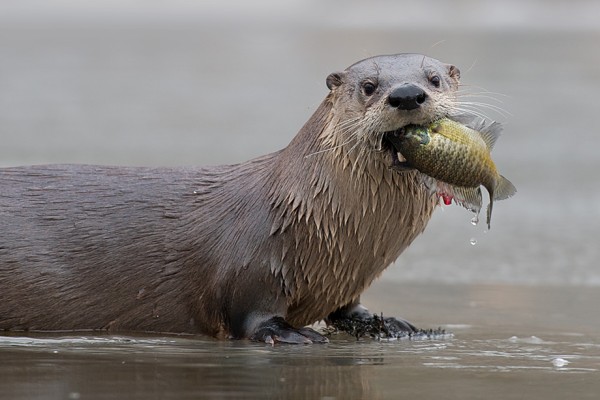
Of all the culprits, river otters do the most damage the fastest. Otters are efficient, specialized fish predators that often hunt in family groups and travel long distances along connected creeks and ponds, so they can find a stocked pond and thin or clear it in a matter of weeks. If your losses have been sudden and severe, otters should be the first suspect. Look for their unmistakable sign:
- Partially eaten fish and scattered scales left on the bank, rather than whole fish taken cleanly.
- Latrine sites — communal spots on the bank piled with dark, fishy-smelling scat full of fish scales and crayfish parts.
- Slides worn into muddy or grassy banks where otters enter and exit the water.
- Five-toed, webbed tracks near the water, and occasional sightings of a sleek, dark animal swimming low with a smooth motion, often in a group.
Latrine sites are the giveaway. Nothing else leaves communal, scale-filled scat on your banks, and finding one all but confirms otters.
Cause 2: Wading Birds (Herons and Egrets)
Great blue herons and egrets are the other major fish predator, and they work differently from otters. A heron stalks the shallows and takes fish one at a time, so losses are steadier and less dramatic than an otter's. The tells are a tall wading bird standing motionless at the water's edge, especially at dawn, and fish that vanish from shallow margins with little other sign on the bank. Herons are also, importantly, protected under federal law, so the response is deterrence and structure, not removal.
Cause 3: Winterkill and Water Quality
Sometimes nothing is eating the fish — the pond itself killed them. Winterkill happens when ice and snow cover cut off oxygen for an extended cold stretch, suffocating fish under the ice; you may find dead fish at ice-out in late winter. Summerkill and fish kills can also follow oxygen crashes, algae blooms, or runoff. The tells are dead fish appearing in numbers (rather than simply vanishing), often after a hard freeze or a hot, still spell, and no predator sign on the banks. This is a pond-management issue — aeration, depth, and water quality — rather than a wildlife problem.
Cause 4: Other Predators and Natural Factors
- Raccoons and mink can take fish from shallow edges, especially smaller ponds, usually in smaller numbers than otters.
- Turtles and larger predatory fish can take fry and smaller fish, gradually affecting numbers.
- Overharvest and natural predation within the pond can quietly reduce a population over time.
- Fish simply holding deep in hot or cold weather can look like a loss when the fish are actually still there.
How to Read the Evidence
Put the clues together and the cause usually becomes clear:
- Sudden, heavy losses plus latrines, slides, and fish carcasses on the bank: otters.
- Steady, one-at-a-time losses with a tall wading bird present: herons or egrets.
- Dead fish appearing in numbers after a hard freeze or a hot, still spell, with no bank sign: winterkill or a water-quality crash.
- Minor, gradual losses on a small pond: raccoons, mink, turtles, or natural predation.
Latrine sites, slides, and fish carcasses on the bank? That's an otter, and it won't stop on its own. We remove them legally within season and protect your pond.
Explore Otter Removal in Overland ParkProtecting Your Fishery
Once you know the cause, you can protect the pond:
- Add fish refuge. Sink structure, brush bundles, or fish cribs so fish have places to escape, which reduces how efficiently any predator can hunt.
- Manage bank access. Reduce undercut banks, log piles, and burrows near the water that give otters resting and denning spots, and consider fencing key access points.
- Deter wading birds legally. Use scare devices, reduce shallow shelf areas, and add cover; never harm protected birds.
- Improve water quality. Aeration, adequate depth, and managing algae and runoff reduce the risk of winterkill and oxygen crashes.
- Act early on otter sign. Because otters travel and hunt in groups, the first latrine or slide is the time to call, before the fishery is gone.
When to Call a Professional
If the sign points to otters, that is the time for professional help. River otters are a regulated furbearer in Kansas with a defined trapping season, so removal must be handled legally and by licensed hands, and it works best paired with pond protection so the next traveling otter finds an easier meal elsewhere. Frontier Trapper inspects the pond and the bank sign, confirms whether otters are responsible, and removes them within the regulated season while helping you safeguard the fishery. Not sure whether the animal you glimpsed was an otter at all? Our guide on telling otters, beavers, and muskrats apart will help you confirm.